
Ant Control · Southern Indiana
Ant Control in Southern Indiana
Reach out now for your free, no-obligation estimate.
- Owner-operated
- Free estimates
- Same-week scheduling
Quick Response Times
Ant problems demand immediate attention. I respond rapidly to service requests throughout Southern Indiana, getting your treatment scheduled without delay.
Experienced Technician
I bring years of hands-on experience eliminating ant infestations. I identify species correctly and apply targeted treatments that deliver results.
Convenient Scheduling
Busy schedule? I work around your availability to find a service time that fits. I coordinate with you to arrange appointments that minimize disruption.
Professional Ant Control Services in Southern Indiana

Ant infestations start small but escalate quickly. A few scouts on your kitchen counter can become hundreds of workers within days, forming trails across floors, into cabinets, and through wall voids. Derrek's Pest Control provides thorough ant elimination services designed to stop active infestations and address the colonies causing them.
Indiana's climate supports multiple ant species, each with different nesting habits and food preferences. Carpenter ants excavate wood to build nests, potentially compromising structural integrity. Odorous house ants form massive colonies with multiple queens, making elimination difficult without proper treatment. Pavement ants nest beneath concrete slabs and sidewalks, sending workers indoors during temperature extremes.
I start with a detailed property inspection to identify the ant species involved, locate nesting sites, and determine how they're accessing your home. This information shapes my treatment approach. Surface sprays alone rarely solve ant problems because they don't reach the colony. My methods target both visible workers and the hidden nests they're connected to, stopping reproduction at the source and preventing new workers from replacing those eliminated.
Common Ant Species in Southern Indiana Homes
Different ant species require different control strategies. Carpenter ants typically nest in damp or damaged wood, often in crawl spaces, attics, or around plumbing penetrations. Signs include piles of wood shavings and rustling sounds inside walls during quiet evenings.
Odorous house ants earn their name from the distinctive smell they release when crushed. These ants prefer sweet foods and moisture, commonly trailing to sinks, dishwashers, and pet food bowls. Their colonies can contain thousands of workers and multiple queens, allowing them to split into new colonies when threatened.
Pavement ants build nests in cracks in concrete foundations, driveways, and sidewalks. They enter homes through expansion joints and foundation cracks, foraging for proteins and sweets. You'll often see small dirt piles near concrete edges where they've been excavating.
Thorough Ant Inspection and Treatment

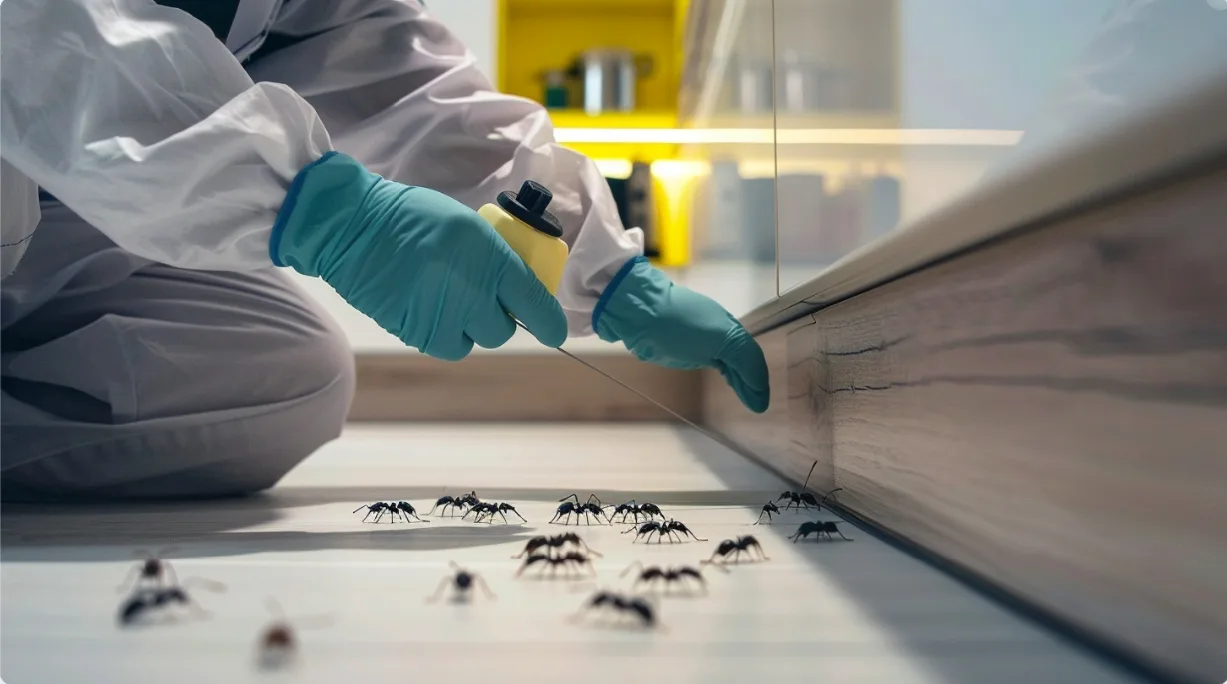
Effective ant control requires finding where colonies are actually nesting, not just where workers are foraging. During my inspection, I trace ant trails back to entry points, check common nesting areas, and evaluate conditions that attract or support ant activity.
Exterior inspection covers foundation perimeters, mulch beds, landscape timbers, tree stumps, and areas where soil meets structures. Interior inspection focuses on kitchens, bathrooms, utility rooms, and any areas with moisture issues or food storage. I look for entry gaps around pipes, cables, windows, and doors that provide access routes.
Treatment plans combine multiple approaches based on inspection findings. Exterior treatments create barriers around the foundation and treat active nesting sites in soil or landscape features. Interior treatments target entry points, void spaces, and areas where ants are trailing. Baiting strategies place slow-acting products that foraging workers carry back to colonies, eliminating queens and brood that never leave the nest.
Every Derrek's Pest Control visit ends with a clear explanation of what to expect during and after treatment, including typical timelines for activity reduction. Most infestations show significant improvement within 7-14 days as treatments reach colonies and disrupt reproduction.
Why Store-Bought Ant Products Disappoint
Homeowners often try sprays, traps, or granules before calling professionals. These products may kill visible ants temporarily, but they rarely reach the colonies producing new workers. Worse, some products cause colonies to split, spreading the infestation to new areas.
Ant baits from retail stores often use formulations that ants ignore or find unattractive. Professional-grade baits are specifically formulated for target species and contain active ingredients at concentrations proven effective for colony elimination.
Without proper species identification and colony location, DIY approaches become frustrating cycles of temporary relief followed by renewed activity.
Preventing Future Ant Problems
After eliminating active infestations, prevention focuses on removing conditions that attract ants and blocking access routes into your home. Ants scout constantly for food and water, so reducing these attractants makes your property less appealing.
Store food in sealed containers rather than original packaging. Wipe down counters daily and address spills immediately, especially sugary substances. Keep pet food bowls clean and don't leave food out overnight. Fix leaky faucets, pipes, and appliances that create moisture ants need.
Outside, trim vegetation away from your foundation and remove debris like firewood, logs, and excess mulch near the house. Keep gutters clean so water drains properly away from the foundation. Seal cracks in concrete and gaps around utility penetrations where ants commonly enter.
Regular monitoring helps catch new activity early. Check areas where you've seen ants before, especially during spring and fall when colony activity peaks. Early detection means simpler, faster treatment.
Long-Term Ant Management
Ant control works best when treatment addresses current infestations while prevention reduces future risk. Even after visible activity stops, colonies can persist if nesting sites aren't properly treated or if conditions remain favorable.
Seasonal changes affect ant behavior. Spring triggers colony expansion and increased foraging. Summer heat drives ants indoors seeking water. Fall activity intensifies as colonies prepare for winter. Understanding these patterns helps time preventive measures effectively.
Combining professional treatment with ongoing property maintenance provides the most reliable protection. Regular inspections identify new activity before it becomes a major problem, and periodic exterior treatments maintain protective barriers during peak ant season.
★ FAQ
Frequently Asked Questions
Most treatments show noticeable activity reduction within 3-7 days as products reach colonies and begin affecting reproduction. Complete elimination typically takes 10-14 days depending on colony size and species. You may see increased activity immediately after treatment as baits attract foraging workers—this is normal and indicates the treatment is working. Carpenter ant colonies may take slightly longer due to their size and nesting locations in structural voids.
Ant activity follows seasonal patterns tied to colony reproduction and environmental conditions. Spring brings increased foraging as colonies expand and new queens establish nests. Summer heat drives ants indoors seeking water and cooler temperatures. Fall activity intensifies as colonies prepare for winter, stockpiling food and seeking protected overwintering sites. Understanding these patterns helps time preventive treatments for maximum effectiveness.
I use products specifically chosen for their effectiveness against ants while minimizing risks to people and pets. Application methods place treatments in targeted areas where ants travel, not in open living spaces. Baits use food attractants appealing to ants but not attractive to pets or children, and are placed in stations or cracks where access is limited. I provide clear instructions about any temporary precautions needed during and after treatment.
📍 On the map
My Complete Ant Elimination Process
Systematic approach ensures thorough colony elimination and lasting protection
My detailed ant control process addresses all aspects of infestation—from initial inspection through follow-up verification—ensuring complete elimination and preventing recurrence.